Standard connector or custom development: which one do you need
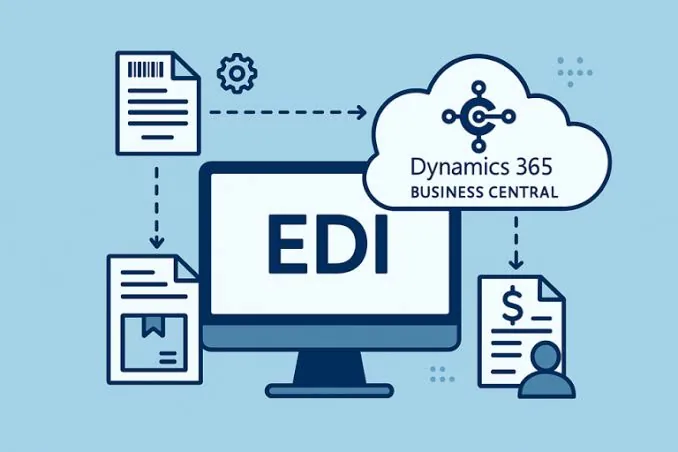
A standard connector or a custom development? The question that actually decides is whether someone has already solved your exact case before.
Read articleWe adapt Microsoft Business Central to the specific challenges of your industry, with the functionality your business needs.
An ERP isn't implemented the same way in a factory as in a chain of stores. The processes, the vocabulary and what needs to be measured all change. That's why we don't start from a fixed template: we start from how your industry works and configure Business Central around that reality.
These are the industries where we've built up the most experience.
If yours isn't listed, keep reading: the ERP's foundation is the same, and what changes is the configuration.
In distribution, margin is won or lost in the warehouse. When real stock doesn't match the system, stockouts, rush purchases and incomplete orders start to appear. Business Central gives you a single source of truth: what you have, where it is and when it needs restocking.
We work with distributors handling thousands of SKUs and several warehouses, connecting purchasing, sales and logistics in a single flow. And if you also sell online, your store draws from the same stock, so you stop selling what you no longer have.
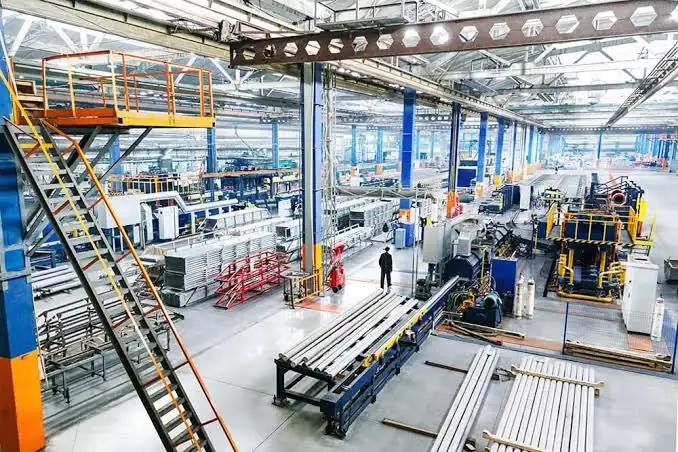
Manufacturing without knowing the real cost of each order is flying blind. With Business Central Premium you plan production, control materials and time, and know what each finished product truly costs you — not what you estimated two years ago.
Bills of materials, routings, production orders and batch or serial number traceability. All inside the ERP, with no parallel spreadsheets and with information connected to purchasing, warehouse and accounting.
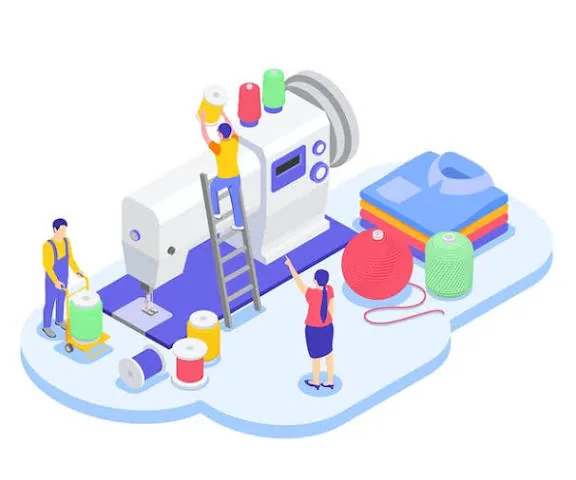
Fashion has a complexity that breaks any generic ERP: a single SKU exists in eight sizes and six colors, changes every season, and is sold in-store, online and to wholesalers all at once.
We configure Business Central with size and color matrices, season management and batch control, so your team works with a single product card instead of forty-eight. And so inventory matches across every channel.
When the store runs one way and the ERP runs another, every till closing becomes manual work and you never know the real margin until the month ends. An integrated point of sale fixes that from day one.
Every sale deducts stock, generates its accounting entry and feeds your reports automatically. Items, prices and promotions are managed in a single place, even with several stores, and the customer finds the same thing at the counter and online.

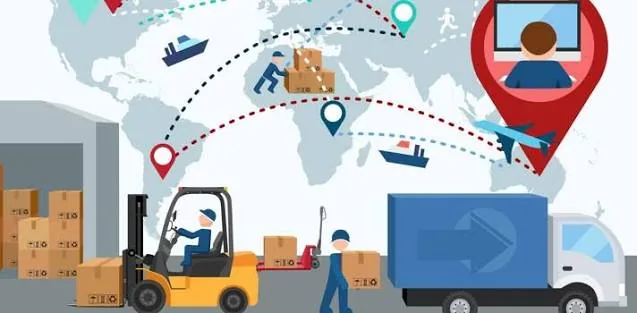
In transport, cost is spread across a thousand places: fuel, maintenance, insurance, vehicle payments. If that information lives in separate spreadsheets, it's impossible to know which route or which customer is costing you money.
We centralize the management of your fleet and your shipments in Business Central, with your vehicles' renting and leasing contracts inside the same system and their due dates under control. If your customers require EDI, we cover that too.
In consulting, engineering or architecture you sell hours, and profitability comes down to one thing: knowing how many were really spent on each project. Without that data, you bill by gut feeling and money-losing projects go unnoticed.
Business Central lets you allocate hours and expenses to each project, compare planned versus actual, and bill by milestone or by progress. At close, you know exactly what margin each job left, and you can budget the next one with sound judgment.
Here traceability isn't a nice-to-have, it's a legal obligation. You need to know where each batch came from, where it went and when it expires, and be able to prove it during an inspection without digging through binders.
We set up batch and expiry control, the costing sheet for each dish or product, and procurement based on actual consumption. With several venues or points of sale, control stays centralized.

Every project is a business in itself, with its own budget, certifications, subcontractors and cost overruns. Running it in Excel works until you have three developments at once and nobody knows which one is going well anymore.
With Business Central you control every project as a job: budget by line item, certifications, subcontractor and machinery costs, and continuous comparison between planned and actual. Financed machinery is managed in the same system.

Business Central is a horizontal ERP: the base of the system (finance, sales, purchasing, inventory) works for any company, and what changes between sectors is how that base is configured and which extra features are switched on. The sectors on this page are the ones where we've built up the most experience, with real cases and configurations already proven, but that doesn't mean we only work with those activities. Tell us what your company does and what specific processes you need to cover, and we'll tell you honestly whether we're a good fit for your project and what approach would make sense, instead of selling you a generic solution that doesn't match how your business really works.
Almost never from the start. Most sector-specific needs are solved by configuring Business Central's standard product — setting up fields, processes and permissions to match how your company works — and, where needed, adding one of our already-built solutions (size and colour management, fleet control, batch traceability, and others). Custom AL development is reserved for what truly makes your business unique: that very specific process that doesn't fit any standard or existing solution. Always starting with configuration before development has an important advantage: custom development has to be maintained with every update, while standard configuration evolves on its own with new Microsoft versions.
Yes, and it's more common than it seems: a manufacturer that also sells through its own shop, a distributor that provides technical service for what it sells, or a construction company that also manages the rental of its machinery. Many SMEs' reality doesn't fit into a single category, and Business Central is built for that: it's configured to cover both activities at once, sharing the same customer, supplier and accounting base, without duplicating information between "departments" that are actually the same company. This avoids the common problem of having two separate systems for two business lines, with the data disconnected from each other and no combined view of the company's real profitability.
It depends on the scope of your project and how many integrations are involved: implementing finance, sales and purchasing for a simple distribution company is not the same as configuring production, batch traceability and online store integration for a fashion company with several sales channels. A limited project, without complex manufacturing or many integrations, is resolved in a few months; one with more pieces in play takes longer because there's more to configure and test. Either way, we don't give generic timelines before knowing your situation: after an initial diagnosis of your processes and needs, we give you a fixed, realistic timeline, organised by phases, so you know what to expect from the start.
A standard connector or a custom development? The question that actually decides is whether someone has already solved your exact case before.
Read articleOverselling happens when your stock lives in several disconnected systems. The fix isn't counting more often: it's having one single source of truth.
Read articleThe 6 points to check before your Verifactu deadline: from confirming the date to making sure your invoice history stays safe.
Read articleTell us about your project and we'll advise you with no commitment on Business Central, Power BI, Power Platform or Azure.
Request your personalized consultation